3

Tiliqua scincoides
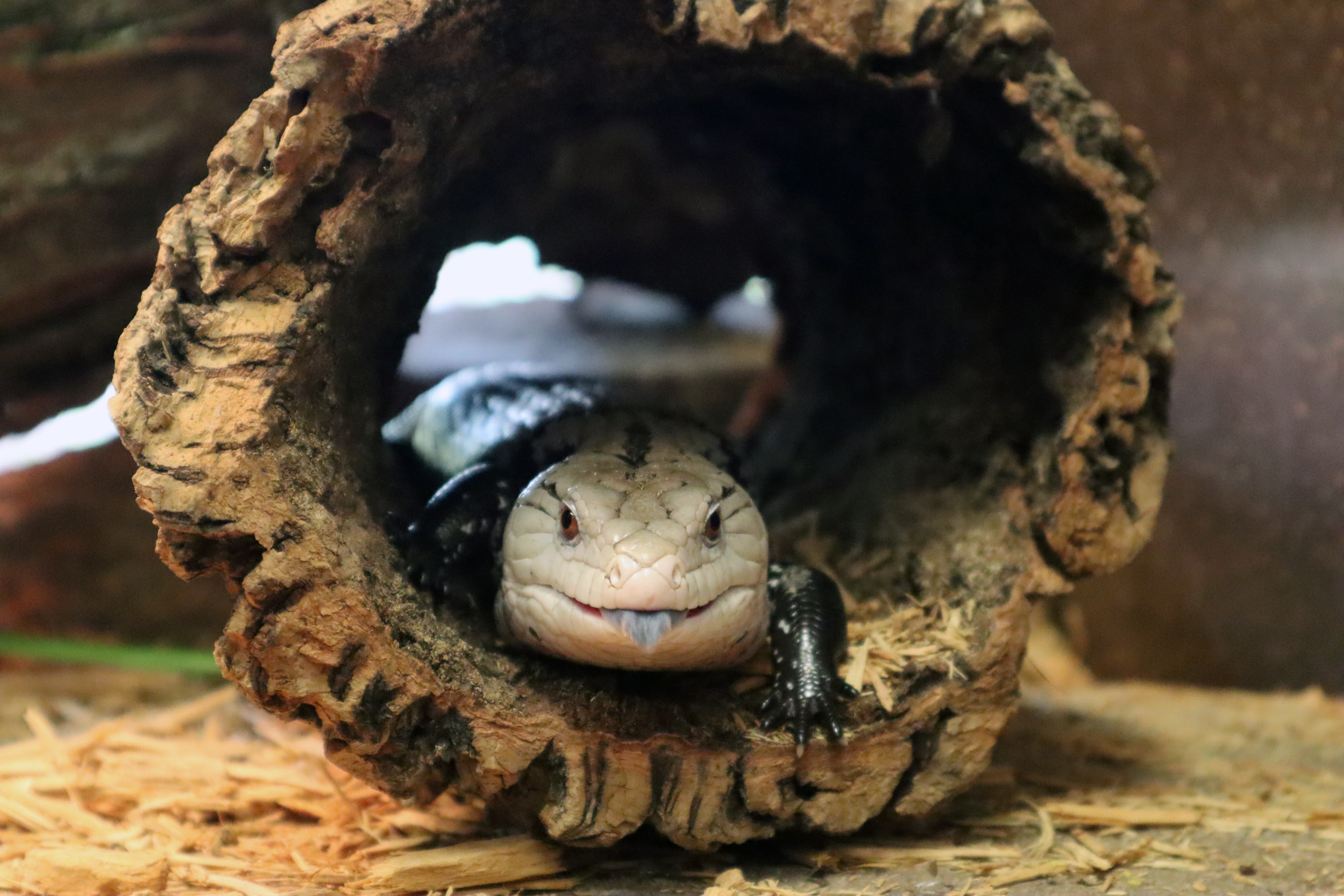
Native to Australia and New Guinea, blue-tongued skinks tend to inhabit open woodlands and coastal areas with ample ground cover.
As an omnivorous reptile, blue-tongues skinks will consume both plants and animals. Small insects and snails often make up a part of this skink’s diet, as well as wildflowers and various leaves.
As their name suggests, blue-tongued skinks are most notably known for their blue-colored tongues. This coloration is a unique adaptation used to warn other animals when they get too close. Although this reptile is neither poisonous or venomous, they use their tongues to trick predators into thinking they might be.
The Fort Wayne Zoo supports Greening Australia, a conservation organization that works towards providing healthy, productive landscapes where people and nature thrive.
Blue-tongued skinks play a crucial role in keeping various insect and snail populations under control.
3