
I LIVE IN ASIA
Originally native to China, the Mandarin duck can now be found in surrounding countries like Russia, Japan and Siberia. Favoring mountainous regions with streams and marshes, this perching waterfowl will often nest higher up in trees, rather than on the ground.
I AM AN INSECTIVORE
The Mandarin duck’s vast diet ranges from seeds, acorns, and grains to insects, snails, and fish. Their diet often fluctuates with the season and what is most abundant.
MANDARIN DUCKS ARE SOCIAL
Mandarin ducks are known for their highly social behavior. The bond shared between pairs is so strong that they will return to one another each breeding season.
BEAUTIFUL BIRD
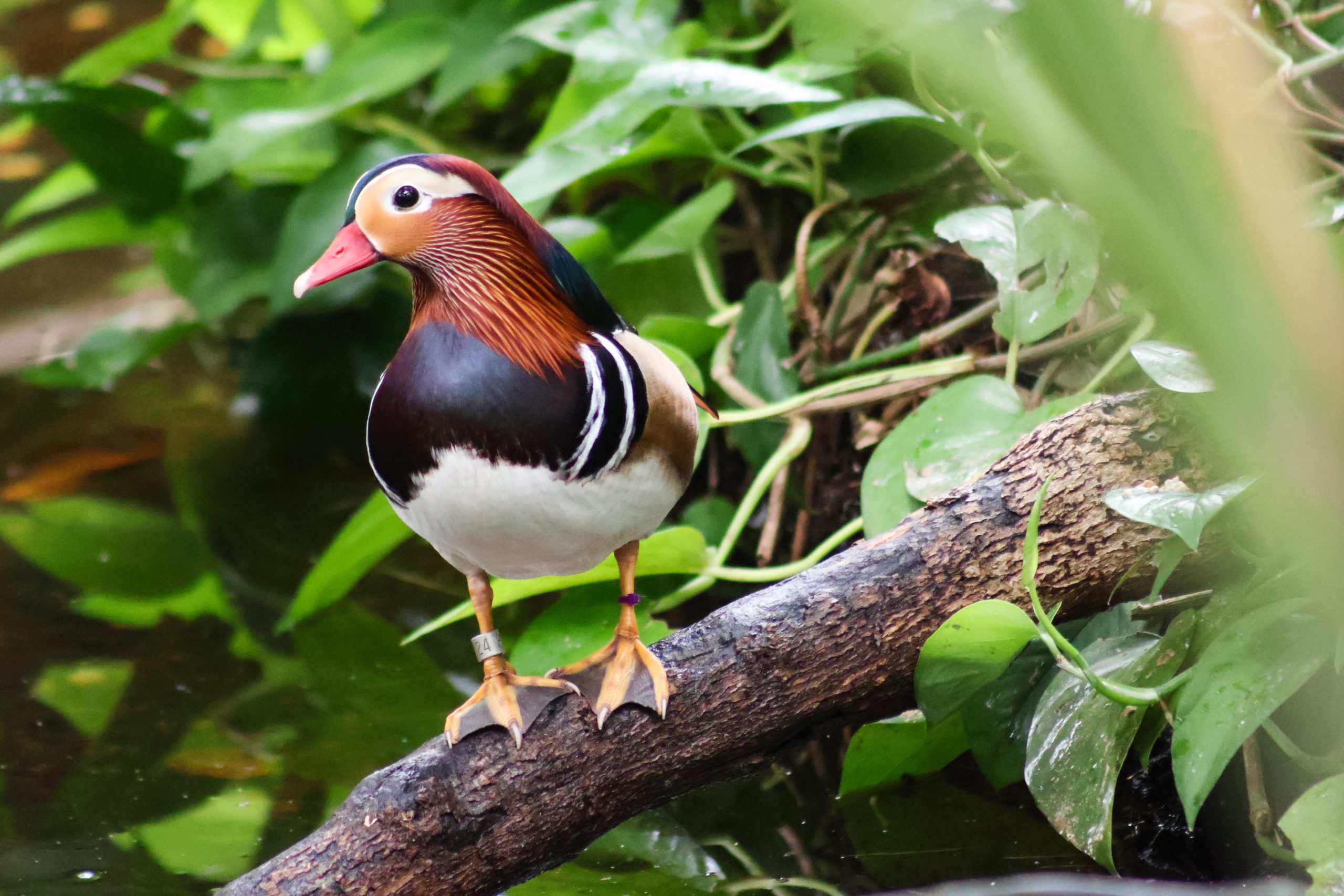
With a rainbow’s worth of colors covering its small body, the Mandarin duck is known for it vibrancy. These birds are sexually dimorphic, meaning that males and females are different colorations, with the males showcasing those notable colors.
HELPING THE MANDARIN DUCK IN THE WILD
By visiting the Fort Wayne Zoo, you are supporting local, regional, and global conservation. A portion of every ticket sold goes towards conservation of wildlife and wild places. Each year, the Fort Wayne Zoo donates over $250,000 to our conservation partners.
I AM IMPORTANT TO MY ECOSYSTEM
Not only does the Mandarin duck aid in insect population control, but they also play and important role in their ecosystems through seed dispersal, boosting biodiversity in their environment.